

If you’ve been hearing about the “fibermaxxing” TikTok trend and are wondering what the hype is all about, let me tell you- this trend is the real deal, and fibermaxxing on a budget is possible for anyone! It’s all about boosting your fiber intake to improve digestion, energy, and even mood. But here’s the best part: you don’t need fancy supplements or expensive superfoods to get started. You can frugal fibermaxx using budget-friendly foods already sitting in your pantry.
What Is Fibermaxxing (and Why It’s a Budget-Friendly Wellness Hack)
Fibermaxxing means intentionally increasing your daily fiber intake to meet or exceed recommended amounts: 25g per day for women, 38g for men. Why? Because fiber helps you stay full, keeps digestion smooth, supports blood sugar, boosts your gut health, and even improves mental clarity.
For people juggling everything from school lunches to late-night laundry, fibermaxxing can be a game changer: more energy, less bloat, better bathroom habits, and real food that actually works.
Why Fiber Doesn’t Have to Be Expensive
Contrary to what wellness influencers might suggest, fiber isn’t locked inside $8 chia puddings or boutique smoothies. In fact, some of the cheapest foods at the store are packed with fiber– think beans, oats, lentils, bananas and carrots. You truly don’t need to overhaul your life. You just need to tweak what you already eat!
Top 9 Cheap High-Fiber Foods Under $1 Per Serving
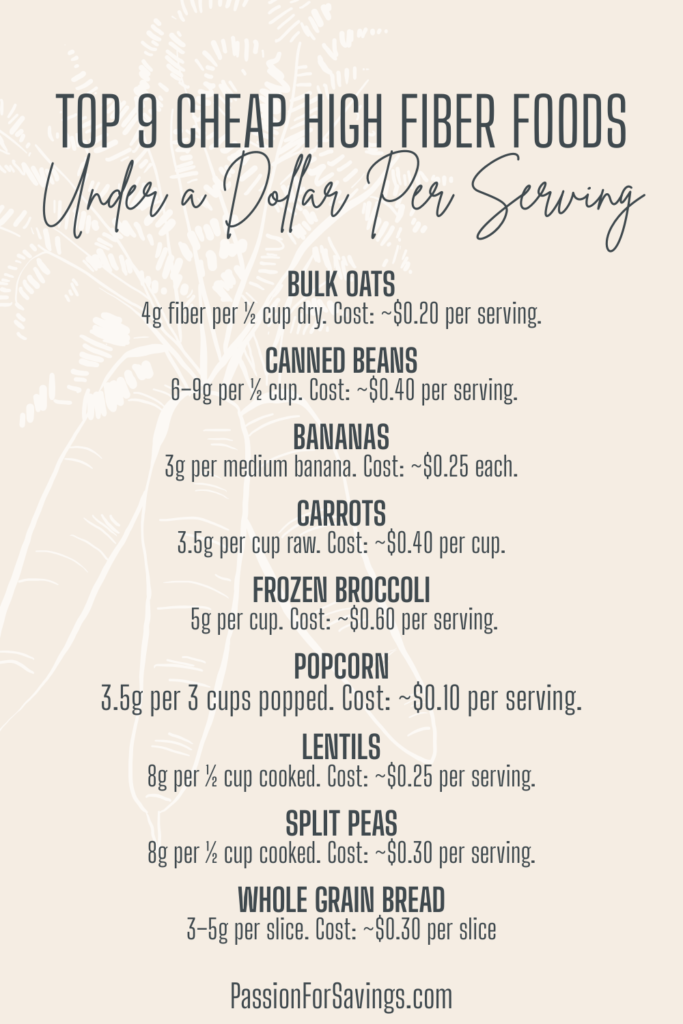
Here are the MVPs of frugal fibermaxxing for anyone on a budget:
- Bulk Oats – 4g fiber per ½ cup dry. Cost: ~$0.20 per serving.
- Canned Beans – 6–9g per ½ cup. Rinse to reduce sodium. Cost: ~$0.40 per serving.
- Bananas – 3g per medium banana. Cost: ~$0.25 each.
- Carrots – 3.5g per cup raw. Cost: ~$0.40 per cup.
- Frozen Broccoli – 5g per cup. Cost: ~$0.60 per serving.
- Popcorn Kernels – 3.5g per 3 cups popped. Cost: ~$0.10 per serving.
- Lentils – 8g per ½ cup cooked. Cost: ~$0.25 per serving.
- Split Peas – 8g per ½ cup cooked. Cost: ~$0.30 per serving.
- Whole Grain Bread – 3–5g per slice. Cost: ~$0.30 per slice, depending on the brand.
Meal Plan Hack: How to Fibermaxx for Less Than $5 a Day
Here’s what a simple day of fibermaxxing might look like:
Frugal Fibermaxxing Meal Ideas
- Breakfast: Overnight oats with banana slices (10g fiber)
- Snack: Popcorn and baby carrots (6g fiber)
- Lunch: Lentil soup and whole grain toast (15g fiber)
- Snack: Apple slices with peanut butter (5g fiber)
- Dinner: Brown rice bowl with beans and broccoli (14g fiber)
Total fiber: ~50g
Estimated cost: ~$4.50 (Depending on brands, where you live, and where you shop.)
High Fiber Lunchbox & Snack Ideas for Kids
- PB & banana roll-ups on whole wheat tortillas
- DIY snack bags of popcorn + dried fruit
- Mini muffins with oats, carrots, and apples
- Hummus + baby carrots or bell pepper strips
- Bean & cheese quesadillas on whole grain wraps
How to Start Fibermaxxing on a Budget Slowly (and Avoid the Bloat)
Fiber is powerful—but too much too fast can backfire. Start with 5–10g more per day than usual and work your way up. Drink plenty of water and listen to your body. Uncomfortable symptoms? Dial it back slightly and build more gradually.
Fiber and Mental Health: The Surprising Link
Beyond digestion, fibermaxxing may offer significant benefits for your mood and mental clarity. Studies show that a fiber-rich diet supports the gut microbiome, which in turn plays a role in producing neurotransmitters like serotonin. This is often called the “gut-brain connection.” Many people report feeling more balanced, focused, and even less anxious after just a few weeks of eating more fiber. If you’re struggling with brain fog or low energy, fibermaxxing may be the most natural and affordable tool you haven’t tried yet.
Soluble vs Insoluble Fiber: What’s the Difference?
When increasing fiber, it helps to understand the two main types: soluble and insoluble. Soluble fiber dissolves in water and forms a gel-like substance that helps lower cholesterol and stabilize blood sugar. It’s found in foods like oats, beans, apples, and flaxseed. Insoluble fiber adds bulk and keeps things moving through your digestive system- it’s found in whole wheat, corn, carrots, and leafy greens. For best results, include both types of fiber in your daily meals.
Fibermaxxing on a Budget Without Cooking
Not a cook? No problem. You can still fibermaxx without ever turning on the stove. Try canned lentils or chickpeas tossed onto salads, pre-cut veggie packs with hummus, fresh fruit with the skin on, or a fiber-rich cereal with unsweetened almond milk. Even microwaveable brown rice and frozen veggie bowls can pack in the fiber if you choose wisely. This is one wellness trend that doesn’t require a chef’s license- just smart choices at the store.
Here are More Cheap Meal Ideas to Make at Home!
- 15 Cheap Crockpot Meal Ideas
- 10 Cheap and Filling Meals for Hungry Teens
- $50 Meal Plan for a Week of Frugal Family Meals
Final Thoughts: Fibermaxxing on a Budget Is Totally Doable
Eating more fiber doesn’t have to break the bank—and these nine frugal options proves it. With just a few smart swaps and store-brand staples, you can fuel your gut health, stay fuller longer, and support your digestion using real, affordable food from stores like Walmart, Aldi, Kroger, or your local grocery chain.
Whether you’re feeding a family in small-town Arkansas, living on a tight budget in the Midwest, or just trying to clean up your diet anywhere in the U.S., this plan makes fiber-rich eating simple, sustainable, and seriously cheap!
